
Repairs that match your panel system
Standing seam, exposed-fastener (R-panel), and corrugated roofs each need different repair methods. We avoid one-size-fits-all patches that fail with movement.
Serving Jacksonville, Florida & surrounding areas
Mon–Sat · 7am–7pm
Stop leaks, quiet wind noise, and secure loose metal panels with a clear repair plan, the right fasteners, and details built for Florida storms.
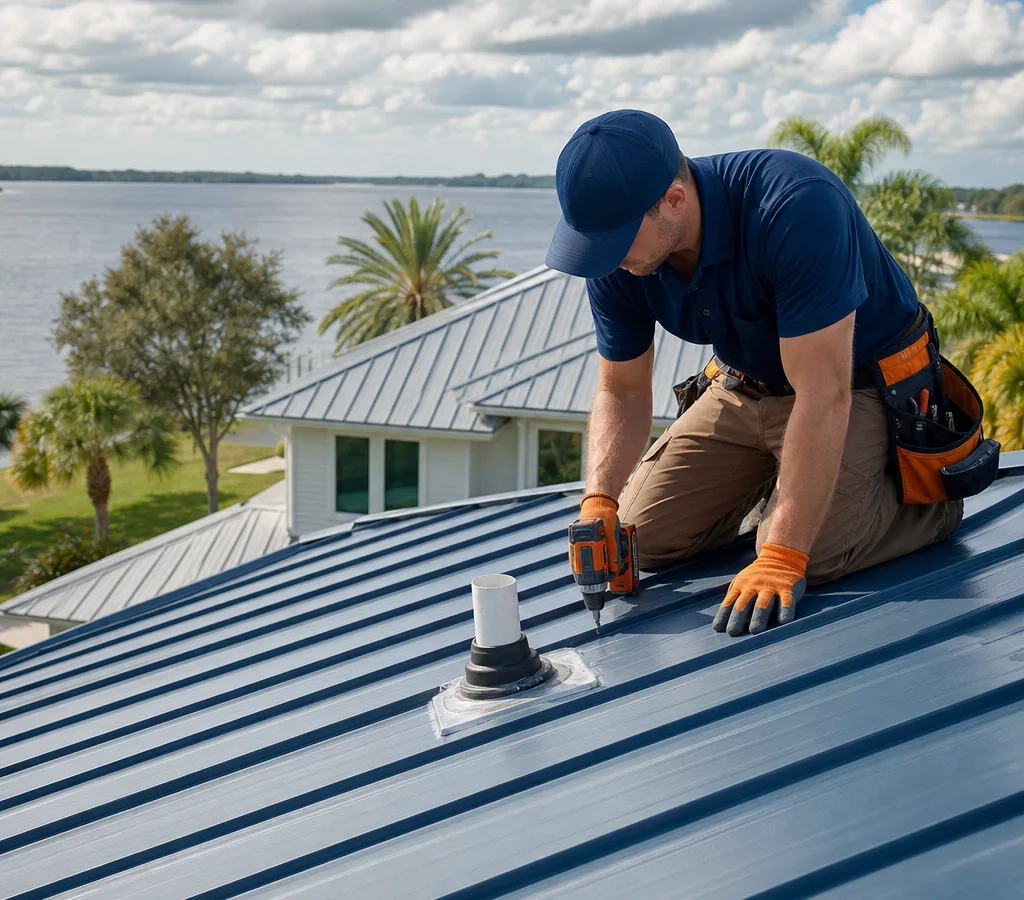
If you searched for jacksonville metal roof repair, you probably have one of three problems: a leak that shows up after heavy rain, a panel or trim piece that loosened in wind, or an older repair that is failing again. Metal Roofing Jax FL handles metal roof repair for residential and light commercial roofs across Jacksonville, with a focus on finding the true entry point and fixing the detail that caused it.
Metal roofs are durable, but they are not leak-proof forever. Movement from heat and sun, fasteners that back out over time, and sealants that dry and crack can all open a path for water. In Northeast Florida, wind-driven rain makes small openings matter, and salt air near the coast can accelerate corrosion on exposed fasteners and cut edges.
Common repair calls we handle include:
You do not need a full replacement just because you have a leak. Many metal roof issues are isolated to a flashing detail, a small section of trim, or a pattern of failed fasteners. The key is inspecting with a repair mindset: trace the water path, check how the roof sheds water, and repair with compatible materials that move with the roof.
Metal roof leaks can travel. Water can enter at a ridge cap, a transition flashing, or a vent boot, then run along ribs or underlayment before it shows up as a ceiling stain. Our inspection starts on the roof and works methodically, rather than guessing from interior damage.
For metal roof repair in Jacksonville, FL, we typically:
After diagnosis, you get a written scope that explains what is leaking, what is being repaired, and what we recommend to prevent repeat issues. Near the Intracoastal and other salty-air environments, we pay extra attention to fastener selection and exposed edges.
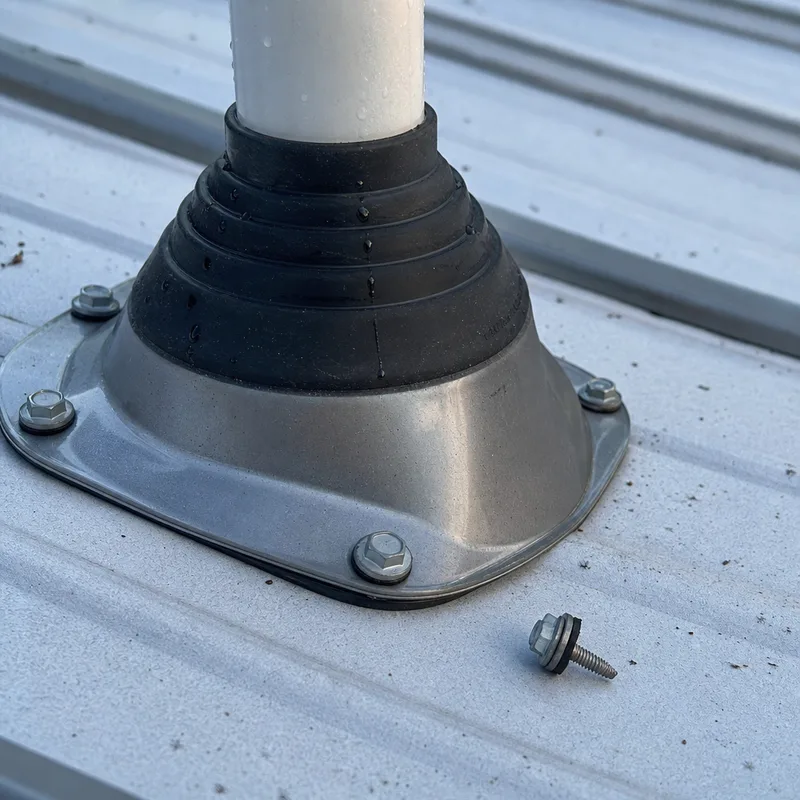
Standing seam, exposed-fastener (R-panel), and corrugated roofs each need different repair methods. We avoid one-size-fits-all patches that fail with movement.
When screws back out or washers fail, we address the pattern, not just the obvious spots. That can include re-fastening with the correct size, spacing, and compatible material.
Many leaks come from ridge caps, sidewalls, headwalls, and penetrations. We repair the details that actually keep water out.
Sealant is not a substitute for flashing. When it is appropriate, we use products intended for metal roofing and prepare the surface for adhesion.
We treat minor rust and protect exposed cut edges when feasible, and flag broader material compatibility issues.
You get straightforward recommendations, repair priorities, and options when there is more than one valid approach.
Jacksonville has a mix of older neighborhoods and newer builds, and we see different roof details depending on the area.
Across town, wind-driven rain tests roof edges and penetrations first. We focus on details that resist uplift and shed water correctly—not cosmetic fixes. This service is for keeping the metal roof you already have performing as it should.
A methodical inspection and compatible repair plan help address the source instead of masking the symptom.
We inspect penetrations, seams, trim, and fasteners, then trace the likely water path. For intermittent leaks, we document conditions such as wind direction, heavy rain, and valley overflow.
You get a clear description of what failed, what we will do, and what we recommend if related weak points are found.
We re-secure panels and trim, rebuild flashing details as needed, and use appropriate tapes and sealants where they belong. We avoid material combinations that can accelerate corrosion.
We verify fastener seating, closures, and water-shedding details, then review what was repaired and what to watch over time.
Most metal roof repair projects in Jacksonville typically range from about $250 to $1,500+, depending on the leak source and access. A small flashing or boot repair is often at the lower end, while larger trim rebuilds, widespread fastener replacement, or multiple leak points can run higher.
Final price depends on roof height and pitch, panel type, the number of penetrations and edges involved, existing flashing condition, and whether corrosion or damaged metal needs replacement. Exact cost is confirmed after an on-site inspection and written scope.
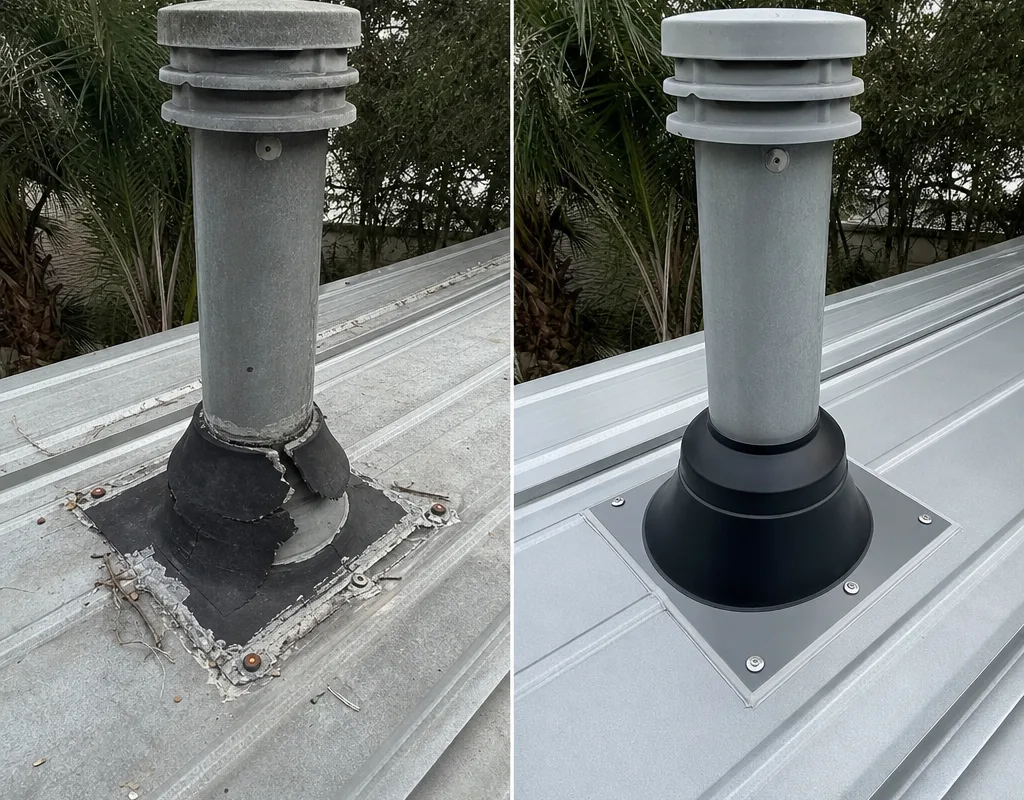
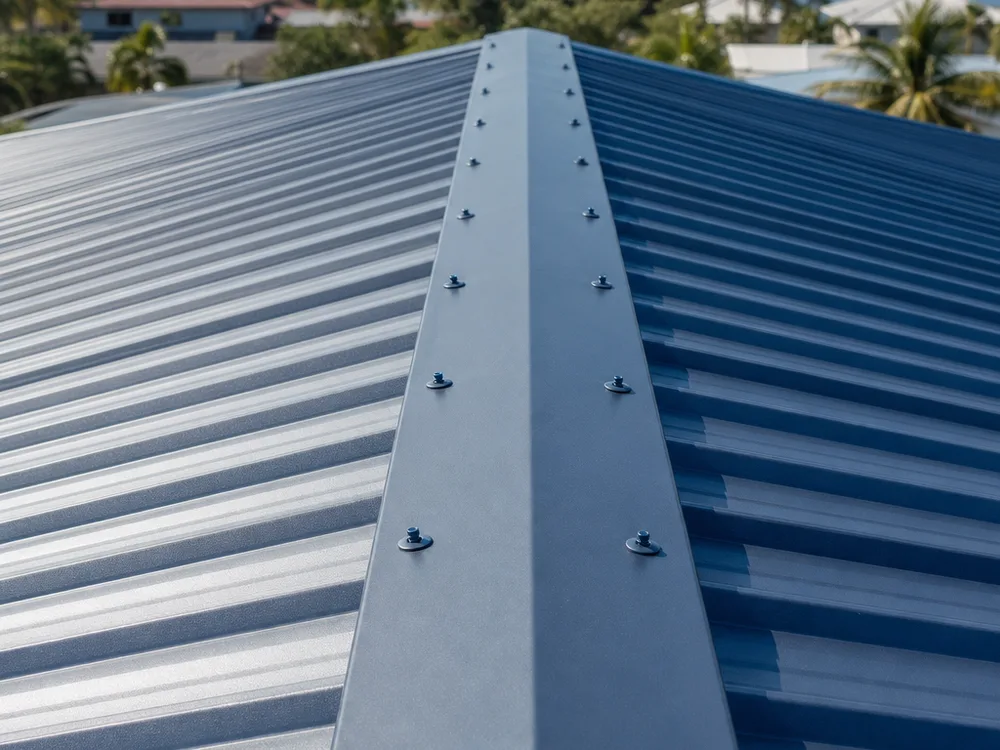
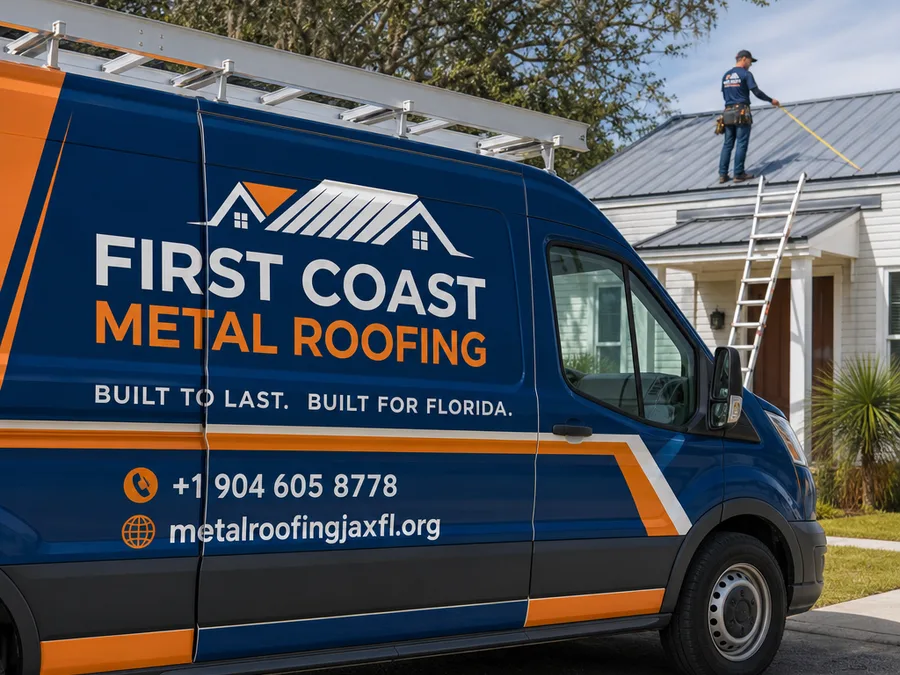
Most metal roof leaks we repair are caused by flashing details and fasteners, not a random hole in the middle of a panel. Penetrations, ridge and hip caps, wall transitions, and backed-out screws are frequent sources, especially when wind-driven rain pushes water uphill under trim.
Yes, many standing seam repairs are done at flashings, penetrations, and trim without removing large panel sections. When panel removal is required, the approach depends on the profile and original installation, including clip type, seam method, and panel direction.
If many fasteners are backing out or washers are brittle and cracked, targeted or full fastener replacement can be more reliable than repeated spot repairs. The right approach depends on how widespread the issue is, whether holes have enlarged, and whether trim and closures were installed correctly.
Protect the interior first with a bucket and towels, move valuables, and note where the water appears and which direction the storm is coming from. If you can safely access the attic, take photos of wet decking or drips. Avoid going on the roof during wind or rain because metal panels become slick quickly.
Many repairs can be completed in a single visit once the source is confirmed, especially for a vent boot, small flashing rebuild, or trim tightening. Multiple leak points, custom-bent trim, or corrosion requiring material replacement can take longer depending on access and sourcing.
Yes, when active leaks or storm damage need quick stabilization, we prioritize making the roof watertight and secure. After the immediate issue is controlled, we outline any follow-up work needed to make the repair durable rather than temporary.
Tell us what you are seeing—leak location, recent storms, and roof type if you know it—and we will schedule an inspection, confirm the cause, and provide a written scope for your Jacksonville metal roof repair.